
A couple of months have already passed since I got my Goethe-Zertifikat C1. It was a goal that took me several years to achieve. It was not super difficult, but it cost me a significant amount of time and mental effort. Now, with a cool head, I can look back on those events and try to put my experience on paper.
Preamble
As often happens to me, I didn't find it possible to put all the information I'd like to share into a single blog post. That's why I decided to break the material into three parts. This post will only contain a factual description of the exam itself. I'll try as hard as I can to avoid subjective conclusions or rants, except where I need to share what I felt during the exam. No worries: there will be plenty of rants, speculations and opinion-based conclusions in the next posts. You'll find links to the next posts at the end of this one.
Facts
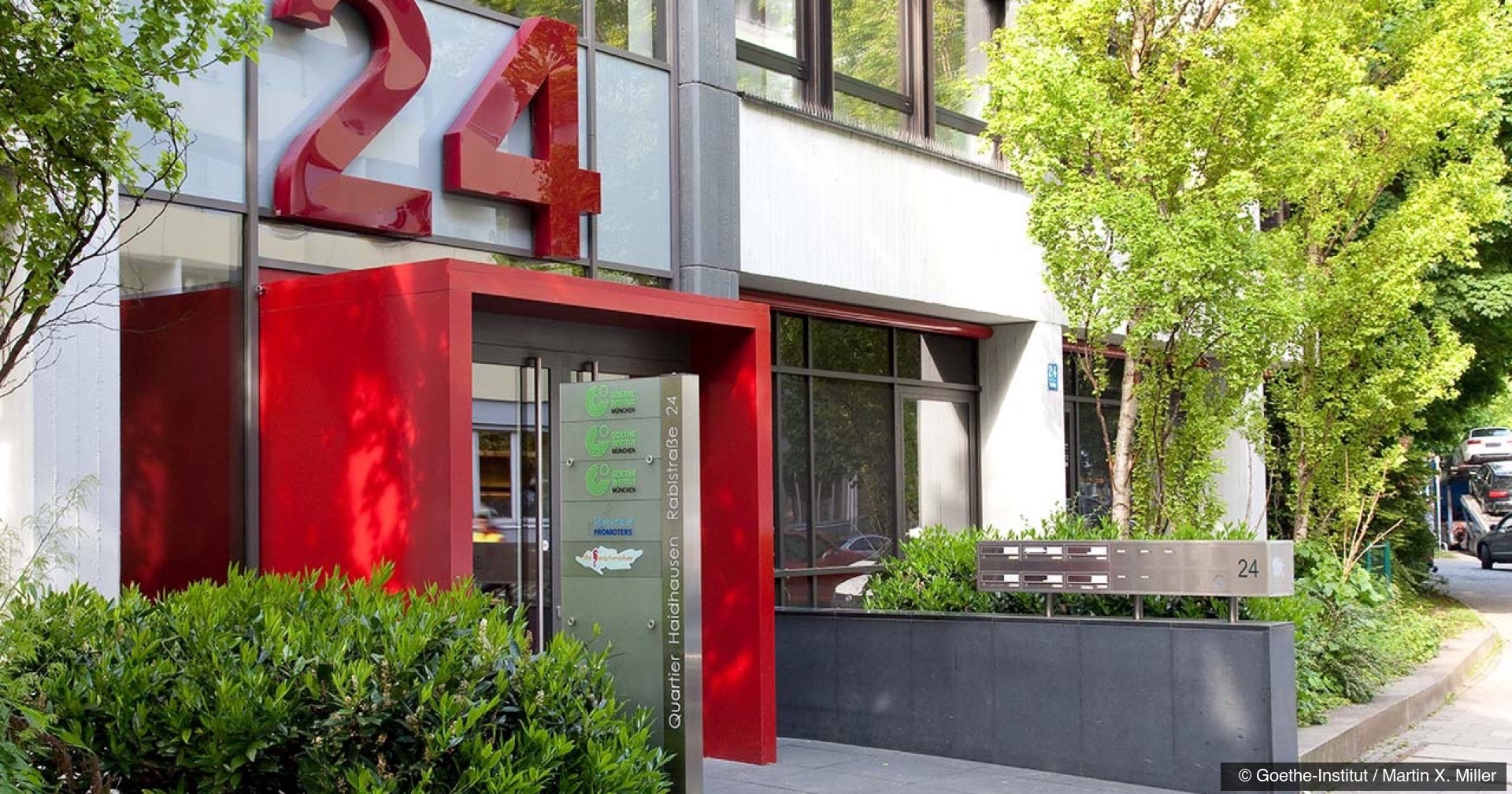
I took the Goethe-Zertifikat C1 exam on 27 August 2025 at the Goethe-Institut Munich. It was the new modular format of the exam, introduced in 2024. The exam cost me €335.00.
On 3 September I received an email with the results of my exam (spoiler: I passed!). So, they kept their promise — it took about a week to receive the results. Important to mention: they no longer send a paper certificate; instead they email a link to the certificate, which you can share later.
As I mentioned, I passed the exam — here are my results:
| Exam Part | Attained Score | Max. Score |
|---|---|---|
| Lesen (Reading) | 67 | 100 |
| Hören (Listening) | 77 | 100 |
| Schreiben (Writing) | 96 | 100 |
| Sprechen (Speaking) | 85 | 100 |
Here is how the points are rated:
| Points | Rating |
|---|---|
| 100 – 90 | Very good |
| 89 – 80 | Good |
| 79 – 70 | Satisfactory |
| 69 – 60 | Pass |
| 59 – 0 | Fail |
OK, enough facts and numbers for now. In the following paragraphs I'll describe the exam process and my personal experience.
Reception and Security
After arriving, all students are invited to the — let's call it — reception room. Students queue at a desk where two assistants (one male and one female) check documents, complete the paperwork and give instructions. It’s important to note that the identification must be a valid government ID — no copies, and driver’s licences are not accepted. After document checks, each student receives an exam registration sheet and a key to a personal locker. Students must put all personal belongings in that locker. Only the government ID, the exam registration sheet and, optionally, a drink are allowed in the exam room. Important: no mobile devices, watches, writing utensils or paper — everything you need will be provided by the institute.
When registration is over, students are divided into two groups: those taking the exam on a computer, and those taking it on paper. After that, each group is escorted to its classroom where the first three parts — Reading, Listening and Writing — take place.
Reading - Listening - Writing
The classroom is already prepared: each student has a desk with their name on it. All three parts — Reading, Listening, and Writing — take place in this classroom under the supervision of two assistants, who distribute the materials and maintain discipline. There are 10-minute breaks between each part. Students are allowed to walk around the building, use the bathroom and even, as I did, go outside for a cigarette. They can even take something from their lockers if needed, but they must return “clean” to the classroom for the next part.
There is a lot of public information about the format of each of these three parts; I just want to mention the time schedule here:
- Reading - 65 minutes
- Listening - 40 minutes
- Writing - 75 minutes
Here I should say a little about my feelings and perceptions during this phase of the exam. Despite all the formal measures the organisers took — prepared tables, no personal items, assistants, etc. — the organisation was not ideal. The biggest problem was that the building itself and its surroundings were quite noisy. There were regular classes in adjacent rooms, and there were visitors. No, they weren't directly next to the exam room, but they were still audible. The rooms had no air conditioning, so the windows had to be opened — with all the sounds of a busy working day in Munich.
The assistants were not ideal too: they talked to each other and to the students in a way that was quite irritating; they were also not particularly accurate with the paperwork and made noise.
There were, of course, students who breathed loudly or made annoying noises with their bodies or the items on their desks. But that is nothing anyone can fix — you simply must be prepared for it. This post is not about preparation, but I'd like to say: emulate a noisy environment when you prepare for the exam.
After the three exam parts are finished, students may leave the classroom and have a break. I think the length of the break is decided individually for each student.
Long Break
In my case, there was a very long — more than three-hour — break between the first three parts and the speaking part. You can take your belongings from the locker, leave the building and spend time outside. Important: be back on time — the appointment for the speaking test is written on the exam registration sheet, which stays with the student until the very end.
Although it’s advisable to have lunch, be careful — don’t make my mistake: if you eat too much you may become sleepy and unenthusiastic, which can affect your performance in the final part of this vaudeville.
Speaking
At the appointed time, all students gather again in the reception room. They must again put personal belongings in the locker and keep only the government ID, exam registration sheet and perhaps a drink with them.
The assistants start to select small groups of students and escort them to a classroom where they prepare for the speaking part. Again, desks are preassigned; writing utensils, paper and the speaking task sheet are already provided. The assistants monitor the room. Preparation time is 20 minutes.
After 20 minutes, one of the examiners arrives. They take two students - paired in advance, as you might expect - and lead them to the exam room. The exam room looked nothing like the Goethe-Institut YouTube video. In my case, unlike the video, the atmosphere was quite formal: the examiners had their own table and each student had a table; the three tables formed a triangle, with each side a couple of metres apart. Students do not choose their table; it is preassigned.
In the prearranged order, students give presentations (~7 minutes each). After each presentation the partner and the examiners ask questions, and then both students discuss the shared topic (~5 minutes). The examiners are quite formal — don’t get me wrong, I don’t mean they are unfriendly — but don’t expect family-friendly small talk; this is a real exam! The exam takes about 20 minutes.
Overall Experience
Taking into consideration that the event is organised for adults with above-average intelligence, mostly experienced in similar exams and not requiring strict supervision, I would rate it 8/10. I once worked as an assistant on a nationwide test for school students, so I know how difficult it is to organise such an exam flawlessly. My experience as a student, doctoral student and participant in many tests and exams also gives me a basis for comparison. They could probably do better, but the level they demonstrated is solid and meets expectations of the Goethe-Institut.
This text turned out quite long, and it may still contain small inconsistencies or unclear parts. If something seems confusing or if you have any questions, feel free to leave a comment — I’ll be happy to clarify.
Thanks for reading, and see you in the next part!
Comments are provided by Disqus, a third-party service, and load only when you request them.